
For teachers
Practical AI literacy for the classroom
Ready-to-use resources to develop AI skills with curiosity and critical thinking. Designed for European and international schools, mapped competence by competence to the new EU/OECD AI Literacy Framework. Made by Diana - an IB teacher, cybersecurity & compliance lead, and AI builder.
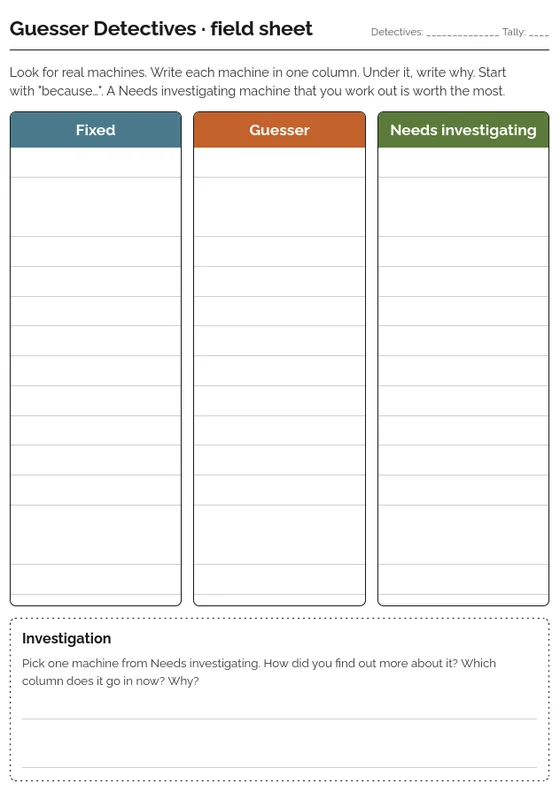
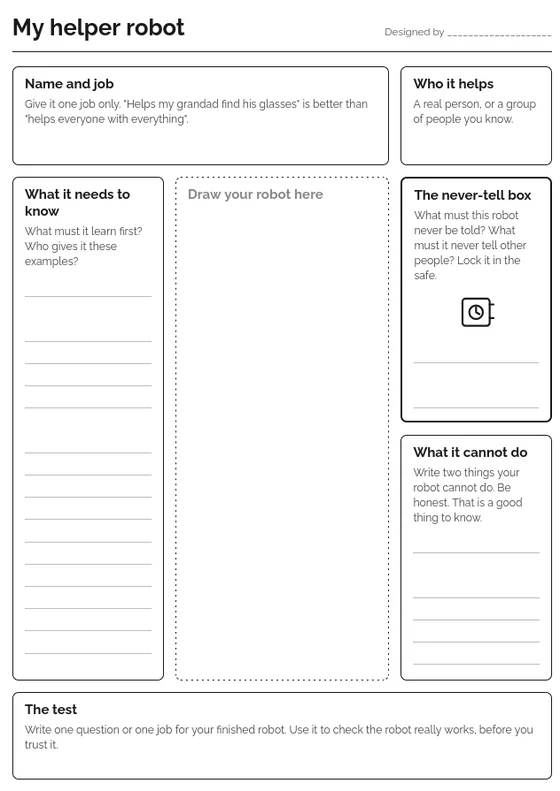
Young learners use paper, scissors and questions. They need no screens or accounts, and share no student data.

The library
Sort the cards, find your pile
Complete classroom packs include what to say, what students will do with it, what to do when the room goes sideways, and the printables. Every card says whether you can open it today or the month it arrives. Free lessons stay free; each classroom pack is bought once, and several can go in one basket.
No cards in this pile yet. More resources arrive through the summer.
Learn it yourself
Two self-paced courses for teachers cover judging and using any AI tool in the work you already do, and setting up Claude safely from the first chat to the first agent. Each ends with a certificate of completion.
The best first AI lesson has no AI in it.
The foundations of AI literacy can be shown with a story, some cards and a pencil: machines that guess from patterns, sound confident when wrong, learn whatever their examples teach them, and follow words instead of meaning. None of that needs a screen. All of it needs a conversation.
Most AI tools set their minimum age at 13 or higher, and European data protection law takes children's consent seriously. Resources that assume eight-year-olds have chatbot accounts are not being honest with you.
Our resources for young learners use paper, stories and discussion. They collect no student data and require no accounts.
The AILit Framework (EU/OECD, June 2026) defines AI literacy in 4 domains and 19 competences; UNESCO's AI Competency Framework for Students (2024) is the global reference, with the human-centred mindset first among its four aspects. Every resource here names the AILit competences it builds and the UNESCO blocks it covers, so your curriculum statement can cite either, or both.
For school leadership team
Looking for support to make your school AI-ready? Visit our page for school leaders with guidance on documents, compliance and implementation plan.
Safety-first AI literacy, in your inbox
New articles, new resources and framework news go to the AI for School newsletter on Substack first. Free to read, easy to leave.